
September 25, 2026
Russian Hybrid Attacks and Europe's Response
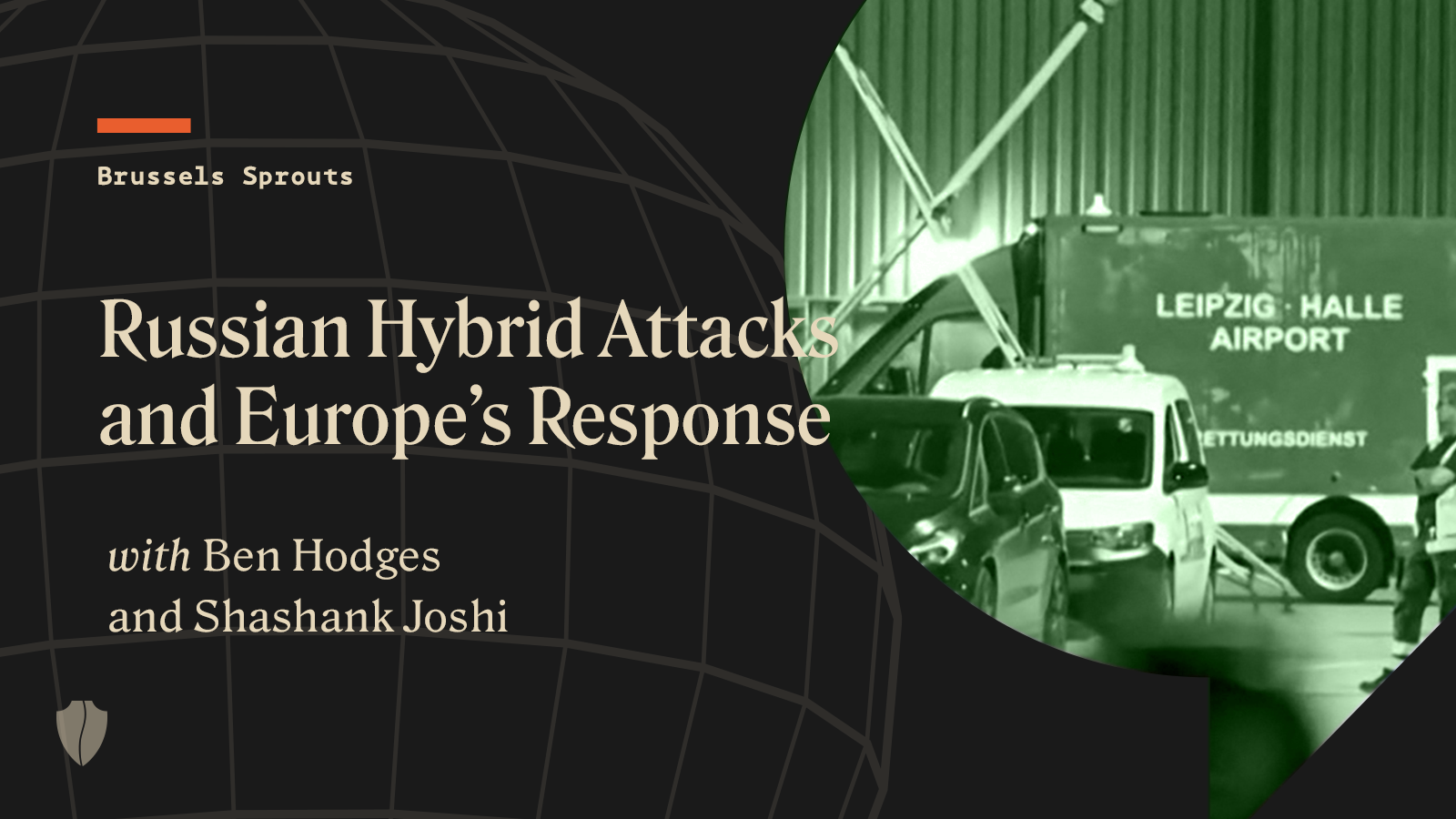
Europe is facing an escalation in high-profile Russian hybrid attacks. Earlier this month, Germany attributed an attempted drone attack at Leipzig Airport to Moscow, Denmark accused a Russian ship of shooting flares at one of its military helicopters, and NATO jets downed a drone carrying explosives over Lithuania. Just yesterday, more Russian drones crashed in Moldova and Romania, while Poland reported sabotage incidents on defense and logistical infrastructure.
In response, European leaders are sounding the alarm. Polish Prime Minister Donald Tusk warned last week that Russia plans to test NATO’s Article V by striking European countries with drones or missiles. Finnish President Alexander Stubb carried a similar message, and French President Emmanuel Macron briefed his country’s political leaders in an emergency meeting last Friday. Attendees included national rally leaders Marine Le Pen and Jordan Bardella, who—despite a history of pro-Kremlin sentiment—criticized Russian “intimidation, threats, destabilization, or psychological warfare.”
These recent events underscore that we are moving into a more dangerous phase of the conflict in Ukraine. Russia is growing more accepting of risk in its hybrid attacks designed to get Europe to stop supporting Ukraine. Europe, in turn, is also growing more accepting of risk in both its efforts to signal to Russia that there will be costs and its support and facilitation of Ukrainian long-range strikes inside Russia.
To help us assess what's happening in Europe and where this escalatory cycle could go, we're very happy to welcome Ben Hodges and Shashank Joshi back to Brussels Sprouts.
Ben Hodges is a retired lieutenant general in the United States Army and the former commanding general of U.S. Army Europe.
Shashank Joshi is the Washington bureau chief at The Economist.
More from CNAS
-
 Video
Defense / Transatlantic Security
Ukraine Peace Push Turns to NATO and DonbasBloomberg Economics defense lead Becca Wasser tells Bloomberg This Weekend that a U.S. proposal linking NATO membership to Ukrainian concessions in the Donbas represents movem...
By Becca Wasser
-
Examining Kushner’s European Security Framework
Podcast
This week, American, Ukrainian, and Russian officials are gathering in Abu Dhabi for the first trilateral peace talks in nine months. But the negotiations could have implicati...
By Andrea Kendall-Taylor & Jim Townsend
-
CNAS Insights
Defense / Indo-Pacific Security / Transatlantic Security / Middle East Security / Energy, Economics & Security
CNAS Insights | National Security Agenda in the New Congress: A 10-Item To-Do ListWhen Democratic majorities sweep into Congress in January, Washington will return to divided government. The prospect of stalemate will be real, with Democrats prone to opposi...
By Richard Fontaine
-
A Blue Wave in America: The Midterms and Foreign Policy
Podcast
In a stunning midterm election, Democrats have won back control of the House and Senate. Even with some races still uncalled, Democrats have secured at least 54 Senate seats a...
By Andrea Kendall-Taylor & Jim Townsend


