
April 17, 2026
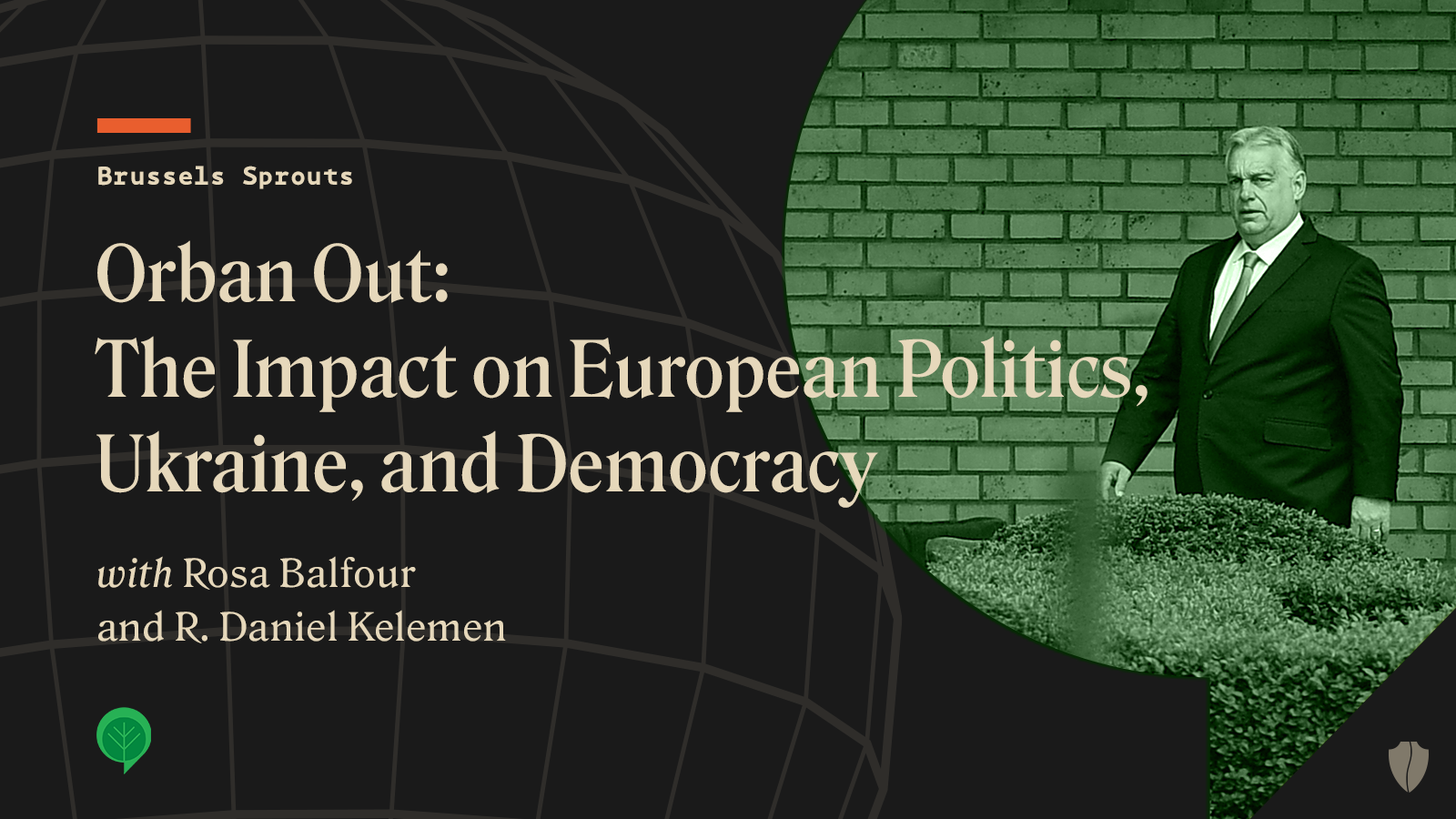
Orban Out: The Impact on European Politics, Ukraine, and Democracy
On April 12, Hungarian Prime Minister Viktor Orban conceded defeat in the country’s general elections, which ousted his party Fidesz and ended his rule of 16 years. The election was widely seen as a referendum on Orban’s self-described “illiberal democracy,” and his loss is a blow to the global nationalist movement promoted by U.S. President Donald Trump. Peter Magyar, a former ally of Orban and the founder of Tisza, the main opposition party, will take over as prime minister once the new parliament convenes.
The defeat is striking not just because Orban held power for so long but because of just how rigged the Hungarian system was in his favor. Over 16 years, Orban’s party tilted the electoral system to its advantage, stacked the judicial system and independent agencies, and took control of most news media. Magyar and his party’s message focused on economic dissatisfaction and anticorruption, which resonated with voters and prompted record turnout. And Magyar’s Tisza party win has broader implications for Europe. In the short term, without Orban advocating for the Kremlin’s interests, blocking European assistance to Ukraine, and watering down sanctions against Russia, change in Hungary will likely yield positive results for Ukraine.
To discuss all of this and more, Brussels Sprouts is excited to welcome Rosa Balfour and Dan Kelemen to this week’s edition.
Rosa Balfour is the director of Carnegie Europe.
R. Daniel Kelemen is the McCourt Chair at Georgetown University’s McCourt School of Public Policy.
More from CNAS
-
Rising Domestic Pressure in Russia?
 Podcast
Over the last several weeks, strain within Russia's domestic political system has become increasingly apparent. The Kremlin has intensified digital controls, intermittently di...
By Andrea Kendall-Taylor & Jim Townsend
-
Charles on a Mission: Can King’s State Visit Salvage U.S.-UK Ties?
Video
Call it the royal trump card: King Charles III has been dispatched to Washington on a state visit at the lowest point in the "special relationship" in at least seven decades. ...
By Jim Townsend
-
Transatlantic Adaptation: A More European NATO?
Podcast
Doubts about U.S. reliability and the future of NATO are top of mind for most in the transatlantic community. The concerns that spiked after President Donald Trump’s threats t...
By Andrea Kendall-Taylor & Jim Townsend
-
U.S. Security Analysts Expect ‘More Europe and Less U.S. in NATO’
Video
The Pentagon's top policy advisor has listed several possible ways the US could punish its NATO partners for refusing to join President Trump's war in Iran. Washington is repo...
By Jim Townsend


