
June 03, 2026
Noteworthy | Promoting Advanced Artificial Intelligence Innovation and Security
By the authority vested in me as President by the Constitution and the laws of the United States of America, it is hereby ordered:
Section 1. Purpose. The United States continues to lead the world in Artificial Intelligence (AI) because of the enormous talent and innovation of our AI industry, and because we refuse to stifle this innovation with overly burdensome regulation. My Administration has unleashed tremendous technological growth and economic investment in AI by slashing the bureaucratic constraints that the prior administration placed on America’s AI developers and researchers, and by instead encouraging AI innovation and accelerating responsible AI adoption across government and industry.
Advanced AI capabilities make our Nation stronger, but also introduce new national security considerations that require coordinated action across executive departments and agencies (agencies), and components. As these capabilities evolve, my Administration will continue to work closely with industry to ensure that the best and most secure technology is deployed rapidly to confront any and all threats to our country. We will continue to lead an America First cybersecurity effort that enhances both our national security and our global AI dominance.


This EO reflects the administration's attempt to reconcile its prior commitment to AI deregulation with the realities of AI progress and dual-use capabilities. The EO goes out of its way to emphasize continuity in its approach in the preceding paragraph while recognizing the need for a shift through the euphemistically labeled "coordinated action." The voluntary arrangement laid out in the EO can certainly work. The question is for how long? If private companies developing the equivalent of cyber weapons can elect to work with the government (or not) before releasing those capabilities publicly, we are essentially ceding national (and international) security to the judgment and goodwill of a few companies. That seems untenable, to put it mildly.
It is the policy of the United States to promote AI innovation and security by working collaboratively with the private sector to modernize government and private sector information systems and harden them against external threats; to protect American ingenuity and intellectual property from exploitation and theft by adversaries; and to cultivate America’s advanced AI-enabled capabilities.
Sec. 2. Upgrading American Systems for Advanced AI. (a) Within 30 days of the date of this order, the Committee on National Security Systems shall prioritize the cyber defense of National Security Systems, as defined in 44 U.S.C. 3552(b)(6)(A), by taking appropriate and expeditious action consistent with the purpose of this order.
(b) Within 30 days of the date of this order, the Secretary of War shall prioritize the cyber defense of Department of War information systems by taking appropriate and expeditious action consistent with the purpose of this order.
(c) Within 30 days of the date of this order, the Secretary of Homeland Security, through the Director of the Cybersecurity and Infrastructure Security Agency (CISA), in consultation with the Director of the Office of Management and Budget (OMB), the Assistant to the President for National Security Affairs, and the National Cyber Director, shall release Binding Operational Directives and other guidance as appropriate to:

CISA has lost about a third of its workforce since 2025, and the President's Budget for FY2027 proposes further reducing CISA's funding by $707 million. CISA, the agency tasked with securing critical infrastructure, arguably has a more important role in the age of AI-enabled cyberattacks. With this new role in managing Binding Operational Directives for the EO, it will be interesting to see how CISA will fulfill its critical role with a diminished budget.
(i) expedite and prioritize the cyber defense of civilian Federal Government information systems in order to protect our Nation’s vital functions;
(ii) establish or expand Federal programs and cybersecurity services that enhance AI-enabled defensive tools; and
(iii) facilitate access to cybersecurity tools and services including, where appropriate, covered frontier models for agencies, State and local authorities, and operators of critical infrastructure such as rural hospitals, community banks, and local utilities.
This is good, but access to a capability is not the same thing as benefiting from a capability. Many rural hospitals and local utilities have barely caught up to cybersecurity best practices from a decade ago. The idea that these often under-resourced entities can keep pace with ever-improving frontier models and patch the vulnerabilities they surface seems, well, optimistic—even if they have early access.
(d) Within 30 days of the date of this order, the Secretary of the Treasury, in consultation with the National Cyber Director, the Secretary of War, through the Director of the National Security Agency (NSA), and the Secretary of Homeland Security, through the Director of CISA, shall form an AI cybersecurity clearinghouse, in voluntary collaboration with the AI industry and operators of critical infrastructure, that coordinates and deconflicts scanning for software vulnerabilities, discovers and validates such vulnerabilities, and coordinates and prioritizes remediation and distribution of vulnerability patches.
(e) Within 30 days of the date of this order, the Director of OMB, in coordination with the National Cyber Director and the Director of CISA, shall determine whether any Federal grant programs have available and relevant funding that can be directed toward applicants developing advanced AI vulnerability detection.
(f) Within 60 days of the date of this order, the Director of the Office of Personnel Management shall expand the United States Tech Force Information Cybersecurity Specialist hiring and placement pathways.
Sec. 3. Secure Frontier Model Deployment. Within 60 days of the date of this order, the Secretary of the Treasury, the Secretary of War, through the Director of NSA, and the Secretary of Homeland Security, through the Director of CISA, in consultation with the White House Chief of Staff, through the National Cyber Director, the Assistant to the President for Science and Technology (APST), and the Secretary of Commerce, through the Director of the National Institute of Standards and Technology, and in coordination with other agencies, as appropriate, shall:

The three-headed hydra bureaucratic structure split across economic and national security agencies is a reflection of the reality of AI technology, but will inevitably lead to ongoing friction in implementation. The White House, particularly the Chief of Staff, should continue to play an active coordinating role. Why the Center for AI Standards and Innovation at the Commerce Department is not at least a co-lead given its experience and capacity is a mystery.
(a) develop and maintain a classified benchmarking process to assess the advanced cyber capabilities of AI models and determine the threshold at which an AI model should be designated a “covered frontier model” for the purposes of this order, sharing such assessments with AI developers and researchers as appropriate.

The benchmark process being classified is unusual. While benchmark questions are often kept secret, evaluators routinely publish their results and methods, including for cyber and other risks. Any threshold faces a tradeoff between rising over time to capture only the most advanced models or staying fixed (thereby capturing a growing share of all models as more actors can train AI models above that threshold). A classified process could give them more leeway to decide which AI models to cover, but also requires much greater trust that this decision is being made appropriately.
It’s also notable that the scope is currently limited to cyber risks and doesn’t cover other risks AI is projected to eventually pose, such as biorisks.
Such a determination shall be made by the Director of NSA, in consultation with the National Cyber Director, the APST, the Director of CISA, and other representatives of the Department of War, as appropriate.
The NSA certainly has technical capacity and expertise, but it's unclear why it should be at the center of making these determinations, rather than the Center for AI Standards and Innovation at the Commerce Department. Putting an intelligence agency in this position may not send the right message to allies and partners interested in adopting U.S. technology.
(b) design a voluntary framework with AI developers through which developers would be able to:

Although the framework is voluntary, AI developers will still be mindful of the various carrots and sticks available to the government—especially given that Anthropic remains designated a supply-chain risk following a dispute with the Pentagon after declining to make its models available for "all lawful purposes."
(i) engage the Federal Government to determine whether model(s) under development meet the designation of “covered frontier model”;
This doesn't resolve what happens if the federal government and companies disagree about whether a model should be designated as a "covered frontier model." This is worth monitoring as a potential future point of friction.
(ii) provide the Federal Government with access to covered frontier models, subject to appropriate confidentiality, cybersecurity, insider-risk, and intellectual-property protection, use, and nondisclosure requirements, for a period of up to 30 days before they plan to release such models to other trusted partners; and
This is down from 90 days in the original, scrapped draft of the EO. Some industry officials had called the 90-day window too onerous for their model release timelines. David Sacks, former White House AI and crypto czar, reportedly caused President Trump to pull the draft EO at the last hour—even after leading frontier AI companies had reviewed it—warning of burdensome regulations that would slow down the AI race with China. The 90-day window was likely one of the points of contention.
This is scoped to only apply to AI models the company plans to release externally. AI labs also deploy their models internally for things like R&D. This doesn't cover internal deployments, and could nudge AI labs towards a higher ratio of internal vs. external deployment.
(iii) collaborate with the Federal Government to select trusted partners that will have early access to covered frontier models to promote secure innovation and strengthen the cybersecurity of critical infrastructure.
We now live in a world where a handful of U.S. companies, participating on a voluntary basis with the U.S. government, get to decide which critical infrastructure operators, businesses, and even foreign countries will be cyber secure in the 21st century.
After the announcement of Mythos-Preview, many allied capitals and companies wondered if and when they'd have access to its capabilities to secure their digital systems and infrastructure. Presumably, the term "trusted partners" is vague enough to include U.S. allies, but the ambiguity could invite questions about whether they will remain in a constant state of having to plead with Silicon Valley and Washington for the capabilities they need to secure themselves. Even many Five Eyes allies (Canada, Australia, and New Zealand) only received access to Mythos this week
(c) Nothing in this section shall be construed to authorize the creation of a mandatory governmental licensing, preclearance, or permitting requirement for the development, publication, release, or distribution of new AI models, including frontier models.
Sec. 4. Protection Against Criminal Actors. The Attorney General shall prioritize the enforcement of 18 U.S.C. 1028, 18 U.S.C. 1030, 18 U.S.C. 1343, and all other applicable Federal criminal laws against anyone who utilizes AI to illegally access or damage a computer without authorization, or who utilizes AI while engaged in such illegal access to further any other crime. This includes breaching any public or private information technology system, or employing AI agents to unlawfully access data or information that is subsequently used for a criminal or unlawful purpose.
Sec. 5. General Provisions. (a) Nothing in this order shall be construed to impair or otherwise affect:
(i) the authority granted by law to an executive department or agency, or the head thereof; or
(ii) the functions of the Director of the Office of Management and Budget relating to budgetary, administrative, or legislative proposals.
(b) This order shall be implemented consistent with applicable law and subject to the availability of appropriations.
(c) This order is not intended to, and does not, create any right or benefit, substantive or procedural, enforceable at law or in equity by any party against the United States, its departments, agencies, or entities, its officers, employees, or agents, or any other person.
(d) The costs for publication of this order shall be borne by the Department of War.
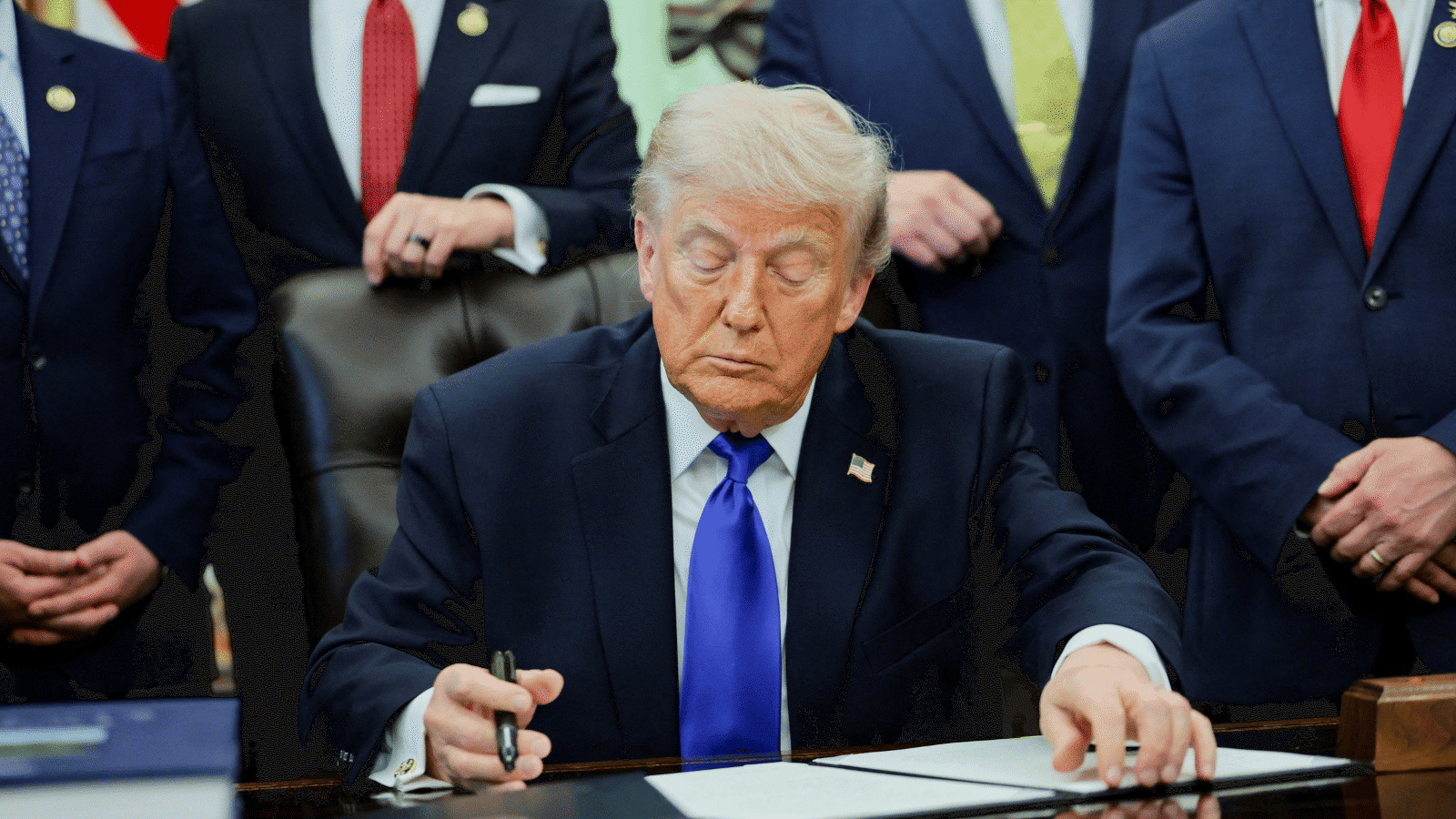
DONALD J. TRUMP
THE WHITE HOUSE,
June 2, 2026.
Authors
-

Vivek Chilukuri
Senior Fellow and Director, Technology and National Security Program
Vivek Chilukuri is senior fellow and director of the Technology and National Security Program at the Center for a New American Security (CNAS), where he studies how artificial...
-
Daniel Remler
Senior Fellow, Technology and National Security Program
Daniel Remler is a senior fellow with the Technology and National Security Program at the Center for a New American Security (CNAS). His research focuses on the implications o...
-
Michelle Nie
Visiting Fellow, Technology and National Security Program
Michelle Nie Duncan is a visiting fellow with the Technology and National Security Program at the Center for a New American Security (CNAS). She focuses on the national securi...
-
Caleb Withers
AI Policy Researcher, Technology and National Security Program
Caleb Withers is an AI policy researcher for the Technology and National Security Program at the Center for a New American Security (CNAS). He focuses on frontier AI and natio...
-
James Sanders
Adjunct Associate Fellow, Technology and National Security Program
James Sanders is a adjunct associate fellow for the Technology and National Security Program at the Center for a New American Security (CNAS). His research focuses on the impl...


In this edition of Noteworthy, CNAS researchers dissect the executive order on AI oversight from the Trump administration, released in June of 2026.
Experts make in-line comments on the most notable statements on the administration's plan to vet advanced AI models 30 days before they're released to the public for national security risks. Learn more about CNAS's work on artificial intelligence.
To speak with CNAS experts contact [email protected].