
September 25, 2026
Russian Hybrid Attacks and Europe's Response
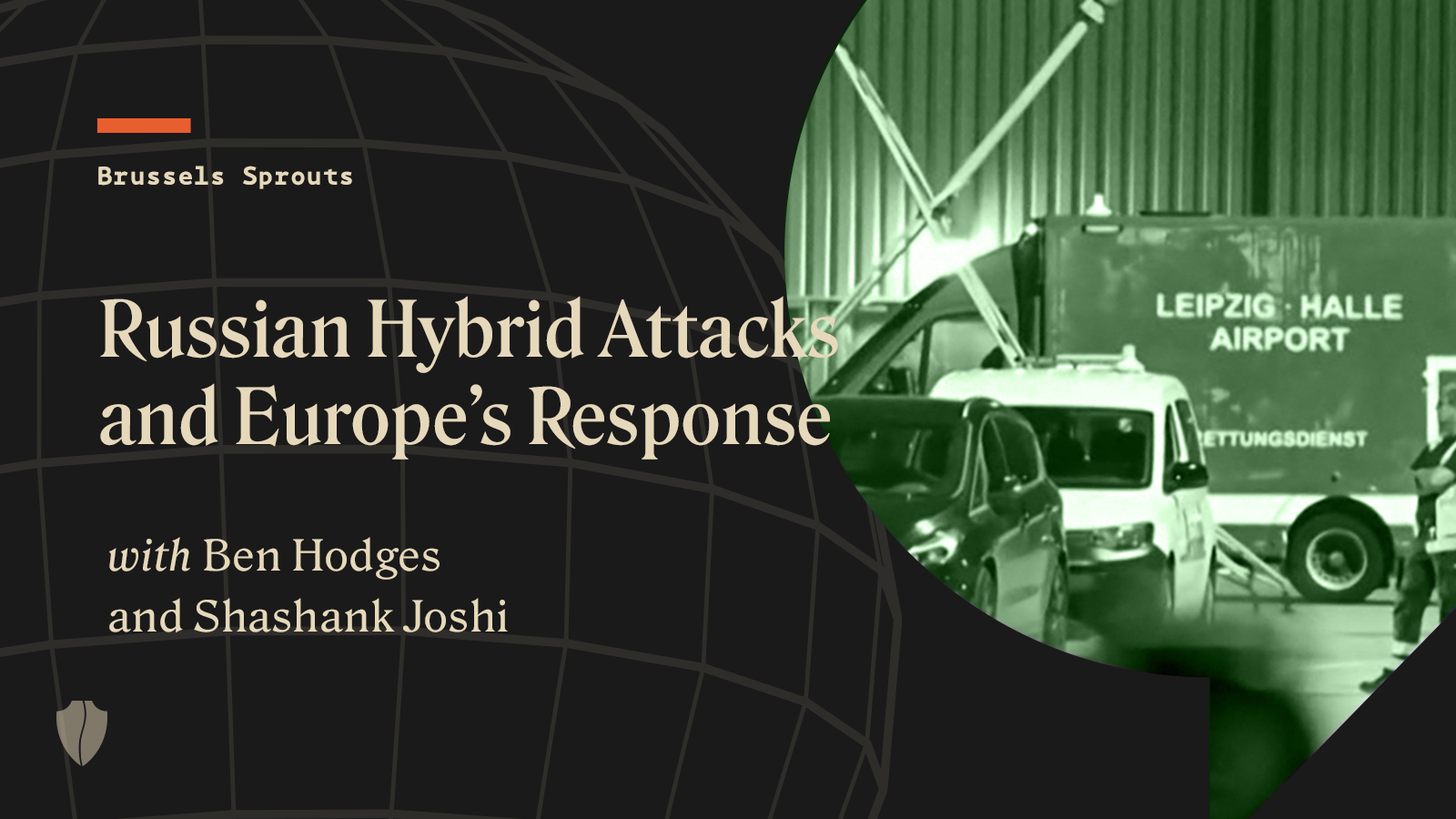
Europe is facing an escalation in high-profile Russian hybrid attacks. Earlier this month, Germany attributed an attempted drone attack at Leipzig Airport to Moscow, Denmark accused a Russian ship of shooting flares at one of its military helicopters, and NATO jets downed a drone carrying explosives over Lithuania. Just yesterday, more Russian drones crashed in Moldova and Romania, while Poland reported sabotage incidents on defense and logistical infrastructure.
In response, European leaders are sounding the alarm. Polish Prime Minister Donald Tusk warned last week that Russia plans to test NATO’s Article V by striking European countries with drones or missiles. Finnish President Alexander Stubb carried a similar message, and French President Emmanuel Macron briefed his country’s political leaders in an emergency meeting last Friday. Attendees included national rally leaders Marine Le Pen and Jordan Bardella, who—despite a history of pro-Kremlin sentiment—criticized Russian “intimidation, threats, destabilization, or psychological warfare.”
These recent events underscore that we are moving into a more dangerous phase of the conflict in Ukraine. Russia is growing more accepting of risk in its hybrid attacks designed to get Europe to stop supporting Ukraine. Europe, in turn, is also growing more accepting of risk in both its efforts to signal to Russia that there will be costs and its support and facilitation of Ukrainian long-range strikes inside Russia.
To help us assess what's happening in Europe and where this escalatory cycle could go, we're very happy to welcome Ben Hodges and Shashank Joshi back to Brussels Sprouts.
Ben Hodges is a retired lieutenant general in the United States Army and the former commanding general of U.S. Army Europe.
Shashank Joshi is the Washington bureau chief at The Economist.
More from CNAS
-
A Rearmed Germany's Place in Europe
 Podcast
Today we are taking a closer look at Germany as it returns to military power. As the United States pulls back from Europe and threats of Russian aggression are heightened, Ger...
By Andrea Kendall-Taylor & Jim Townsend
-
Sep 18, ’26 Washington Roundtable
Podcast
On this week’s Defense & Aerospace Report Washington Roundtable, Dr. Patrick Cronin of the Hudson Institute think tank, Michael Herson of American Defense International, f...
By Jim Townsend
-
Russia Provokes NATO ‘Grey Zone’ with ‘Clever Bullying’ Tactic, but It Will Escalate
Video
“Eventually something's going to happen in the escalation. I mean, maybe it's a mass casualty event or something that really gets us out of that grey zone into a real provocat...
By Jim Townsend
-
Domestic Russia: Security Services, the Economy, and Elections
Podcast
Today we are turning to domestic Russian politics, with Russia’s State Duma elections coming up September 18th through the 20th. The elections are taking place in a more uncer...
By Andrea Kendall-Taylor & Jim Townsend


