
October 30, 2026
Protests, Divisions, and the Mood in Europe
For much of Russia’s war against Ukraine, Europe has demonstrated remarkable unity and resolve. Despite economic pressures, political disagreements, and repeated predictions that its support would falter, European governments have largely held together. But as the war heads into another winter, that unity is facing a growing test.
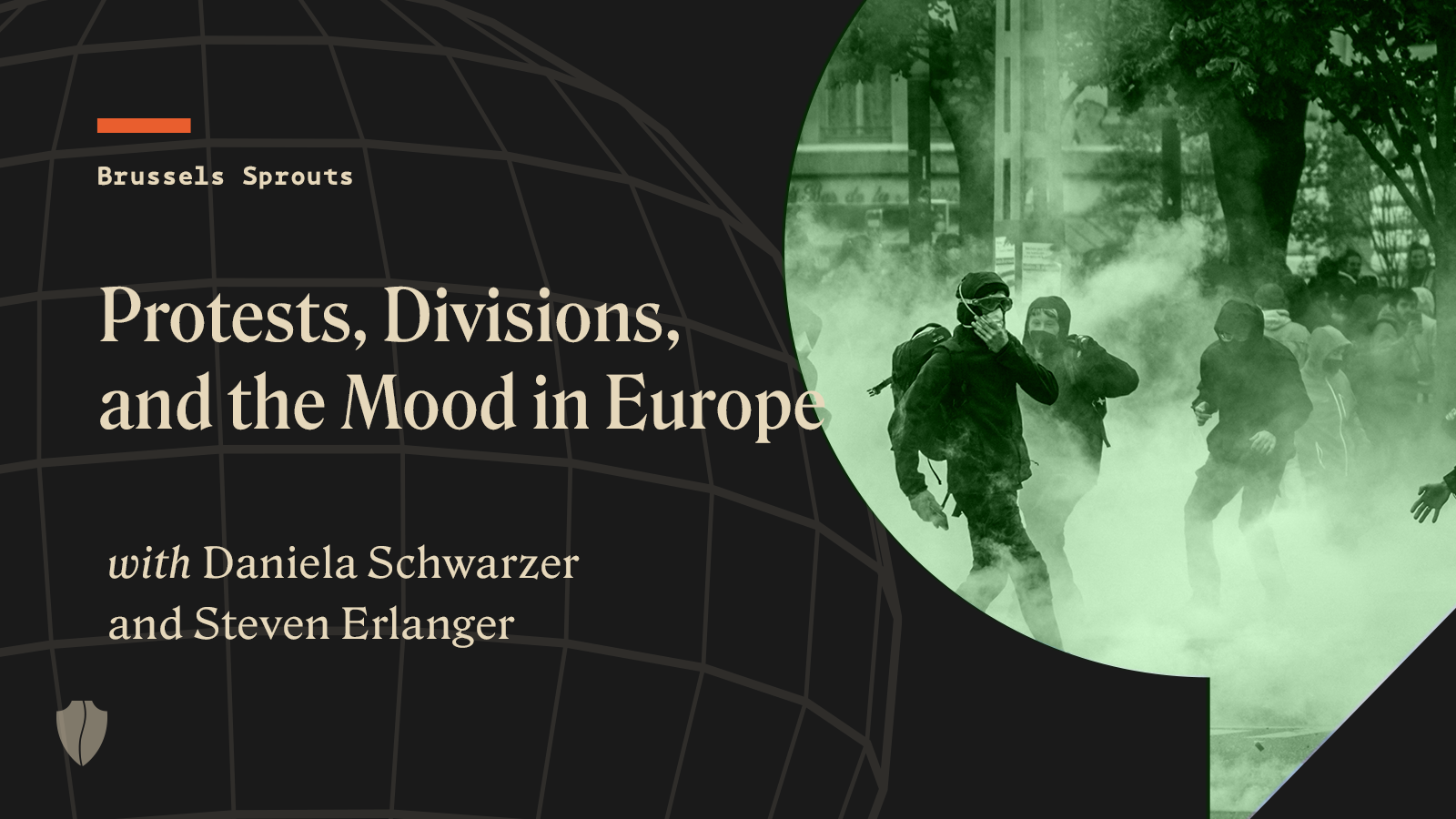
Across Europe, domestic political pressures are mounting. Protests in France, Italy, Albania, and elsewhere have exposed growing public frustration and political instability, potentially making it harder for governments to commit more resources to Ukraine. At the same time, divisions are emerging over how Europe should deal with Moscow. The recent call between Norwegian and Finnish leaders and Russian President Vladimir Putin have sparked disagreements over Europe’s diplomatic approach.
All of this comes as Russia is intensifying its attacks on Ukraine heading into winter. Kyiv faces enormous financing needs, and the United States is stepping back from its traditional leadership role while at times appearing to move closer to Moscow. The question now is: Does Europe have the capacity to increase its support to Ukraine? And could perceptions of growing divisions further reinforce Putin’s sense that time is on his side?
So, to discuss these questions and more, we’re delighted to welcome Daniela Schwarzer and Steven Erlanger to Brussels Sprouts.
Daniela Schwarzer is the incoming president of the Hertie School in Berlin and a professor of European governance and geopolitics.
Steven Erlanger is the chief diplomatic correspondent in Europe for The New York Times.
More from CNAS
-
Trump Will Struggle With Diplomacy Whilst Putin Is Emboldened
 Video
Putin is “not in the mood for a ceasefire” because he “thinks that he’s going to drive Ukraine to their knees this winter”, says former deputy assistant secretary of defence f...
By Jim Townsend
-
Midterm Push or Meaningful Shift? Trump’s Approach to Russia
Podcast
On October 9, U.S. President Donald Trump announced he had reached a deal with Russian President Vladimir Putin to produce to purchase Russian diesel ahead of next month’s mid...
By Andrea Kendall-Taylor
-
Thanks to Trump and Putin the Risk Russia Poses Is Only Likely to Grow
Podcast
"Keep your friends close and your enemies closer." Or is it keep your enemies close and kick your friends to the curb? The Trump administration certainly seems to think the la...
By Andrea Kendall-Taylor
-
Commentary
Indo-Pacific Security / Transatlantic Security / Middle East Security
The Axis of Upheaval Goes to WarThey are fine-tuning their cooperation to make their partners more resilient—and more dangerous to the United States—while limiting costs and risks....
By Andrea Kendall-Taylor & Richard Fontaine


