
July 10, 2026
Europe Stepping Up and the United States Stepping Back
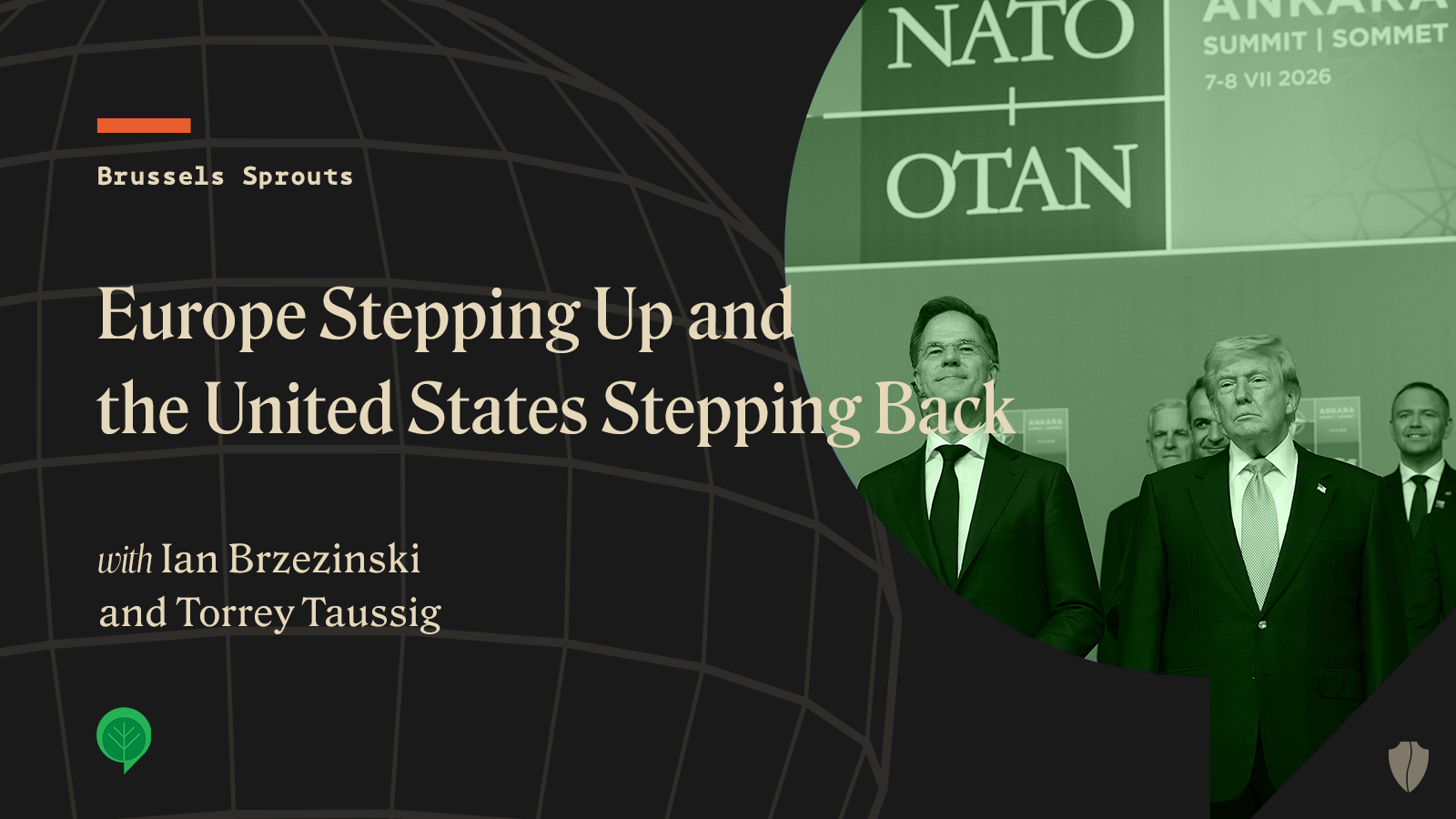
This week, the Allies met for the NATO summit in Ankara, Türkiye, in what was billed as a summit of low expectations. President Donald Trump once again created headlines with public comments about Greenland and criticism of European allies for failing to support the United States during the Iran conflict—but by most accounts, the conversations behind closed doors were far more constructive, and the summit avoided the kind of transatlantic rupture that many feared. Outcomes were positive for Ukraine as the European allies and Canada made clear that they are now the backbone of support. Trump also told President Volodymyr Zelenskyy that the United States will license the production of Patriot missile interceptors in Ukraine.
Overall, the biggest takeaway then wasn't politics at all, but procurement. Through the NATO Defense Industry Forum, the Allies announced more than $50 billion in new procurement and industrial agreements, signaling that NATO is moving beyond talking about defense spending to actually building the industrial capacity needed to sustain deterrence.
Taken together, these developments raise a broader question about the future of the alliance. In many ways, the summit offers a glimpse of what some analysts are calling NATO 3.0, a model in which Europe assumes much greater responsibility for its own defense, while the United States remains the alliance’s strategic backstop. If that is indeed where NATO is headed, are we seeing the emergence of a more sustainable transatlantic bargain? Or are we creating new risks for deterrence and alliance cohesion?
To answer these questions and more, Brussels Sprouts is excited to welcome Ian Brzezinski and Torrey Taussig to this week’s edition of the show.
Ian Brzezinski is a resident senior fellow with the Scowcroft Center for Strategy and Security at the Atlantic Council and former deputy assistant secretary of defense for Europe and NATO policy.
Torrey Taussig is the director of and a senior fellow with the Transatlantic Security Initiative at the Scowcroft Center and a former director for European affairs on the National Security Council.
More from CNAS
-
 Commentary
Indo-Pacific Security / Transatlantic Security / Middle East Security
The Axis of Upheaval Goes to WarThey are fine-tuning their cooperation to make their partners more resilient—and more dangerous to the United States—while limiting costs and risks....
By Andrea Kendall-Taylor & Richard Fontaine
-
Could the Iran War Spread to Europe?
Podcast
More than seven months have passed since the United States launched Operation Epic Fury against Iran. The resulting war has disrupted global energy markets, exacerbated region...
By Andrea Kendall-Taylor & Jim Townsend
-
Ukraine's Winter Forecast: Economy and Politics
Podcast
A fast-approaching winter looms over Ukraine. Russia has intensified a concerted campaign against the infrastructure that keeps Ukraine’s economy running, striking railways, w...
By Andrea Kendall-Taylor & Jim Townsend
-
Why Has America Suddenly Pulled Its Bombers Out of Britain?
Video
The sudden withdrawal of American heavy bombers from RAF Fairford back to the United States follows a major incident near the Gloucestershire airbase. Five men were arrested n...
By Jim Townsend


