
March 05, 2026
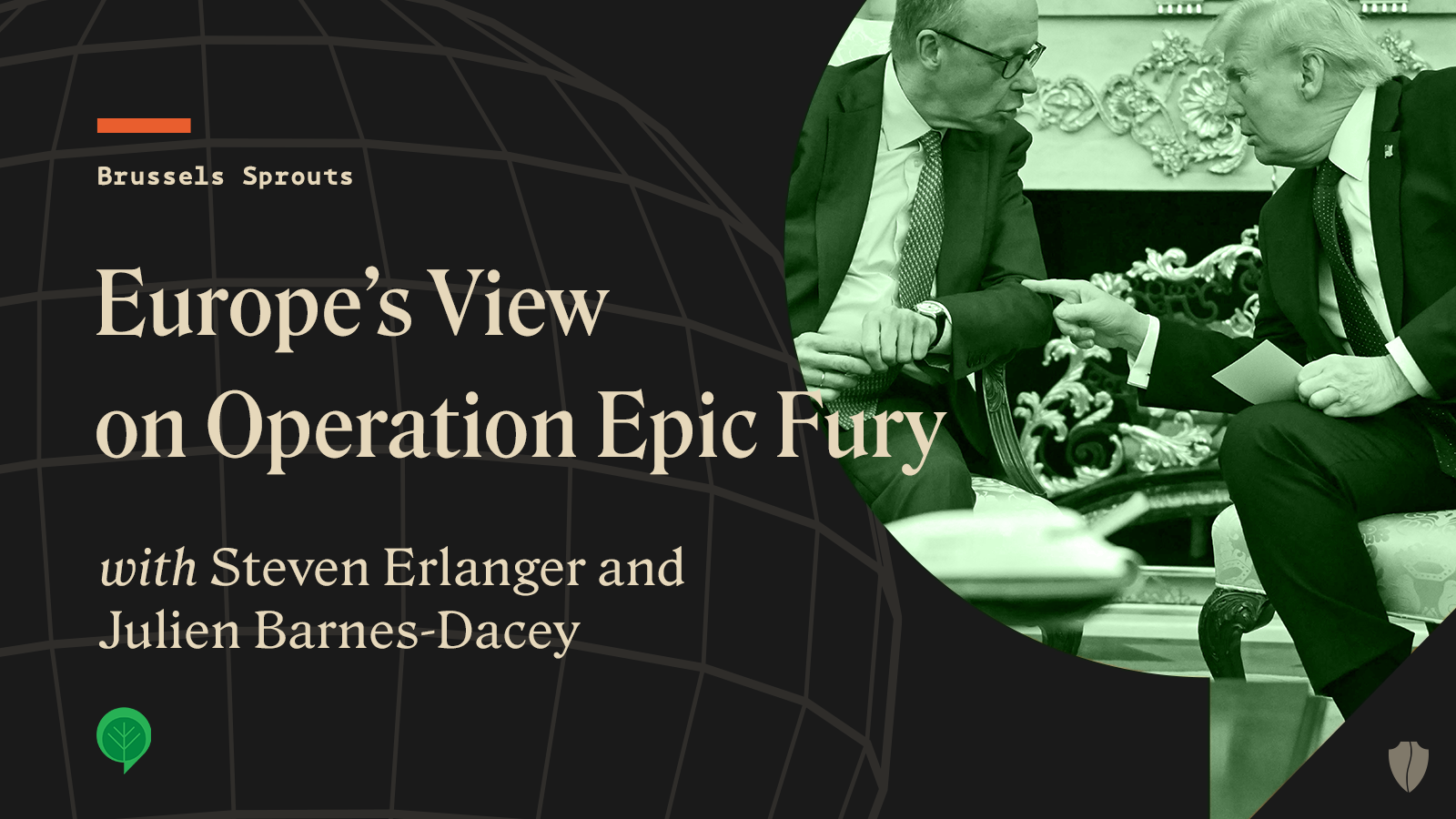
Europe’s View on Operation Epic Fury
On February 28, the United States launched Operation Epic Fury, a major military campaign against Iran carried out alongside Israeli strikes. The opening wave targeted Iranian command and control nodes, missile forces, and military infrastructure across multiple cities and included a decapitation strike that killed the supreme leader. The conflict quickly spread beyond Iran itself. Tehran has retaliated with missile and drone strikes across the Gulf, hitting U.S. and allied targets in countries including Bahrain, Kuwait, Qatar, and the United Arab Emirates, and even striking the British military base in Cyprus.
From Europe, the response has been sharply divided. Spain’s government has rejected what it called the “unilateral military action” by the United States and Israel and denied U.S. forces the use of Spanish bases for the operations. Sitting with German Chancellor Friedrich Merz in the White House, President Donald Trump slammed Spain’s position and threatened to cut off trade with Madrid. And Spain hasn’t been Trump's only target—Trump has been highly critical of UK Prime Minister Keir Starmer. After Starmer said the UK did not support regime change from the sky and initially blocked the use of UK bases for strikes, Trump said of his counterpart, “this is not Winston Churchill we are dealing with,” and that the special relationship between the United States and the UK is “not what it was.” Across European capitals, officials are also bracing for the consequences: fears of a new refugee crisis, evacuations of citizens from countries across the Gulf, higher energy prices, cyber and terrorism threats, and concerns that a widening Middle East conflict could further strain already tight munitions supplies needed to support Ukraine.
To discuss all this and much more, Brussels Sprouts welcomes Steven Erlanger and Julian Barnes-Dacey.
Steven Erlanger is the chief diplomatic correspondent in Europe for The New York Times and is based in Berlin.
Julien Barnes-Dacey is the director of the Middle East & North Africa program at the European Council on Foreign Relations.
More from CNAS
-
A Rearmed Germany's Place in Europe
 Podcast
Today we are taking a closer look at Germany as it returns to military power. As the United States pulls back from Europe and threats of Russian aggression are heightened, Ger...
By Andrea Kendall-Taylor & Jim Townsend
-
Russia Provokes NATO ‘Grey Zone’ with ‘Clever Bullying’ Tactic, but It Will Escalate
Video
“Eventually something's going to happen in the escalation. I mean, maybe it's a mass casualty event or something that really gets us out of that grey zone into a real provocat...
By Jim Townsend
-
Domestic Russia: Security Services, the Economy, and Elections
Podcast
Today we are turning to domestic Russian politics, with Russia’s State Duma elections coming up September 18th through the 20th. The elections are taking place in a more uncer...
By Andrea Kendall-Taylor & Jim Townsend
-
Sep 11, ’26 Washington Roundtable
Congressional Testimony
Jim Townsend, an adjunct senior fellow at the Center for a New American Security, joins the Defense & Aerospace Report Podcast to discuss the latest on the war in Ukraine,...
By Jim Townsend


