May 01, 2026
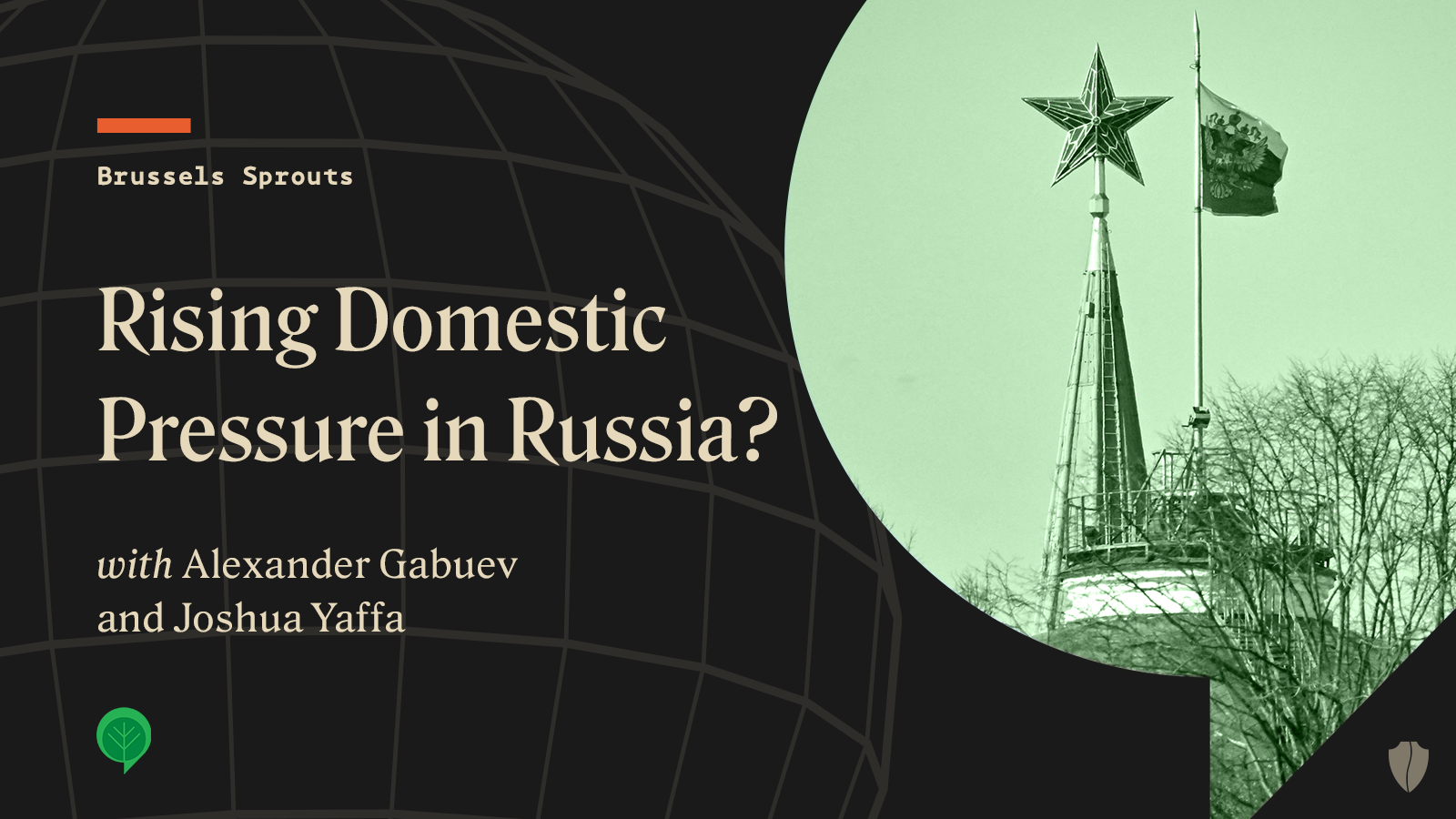
Rising Domestic Pressure in Russia?
Over the last several weeks, strain within Russia's domestic political system has become increasingly apparent. The Kremlin has intensified digital controls, intermittently disrupting mobile internet access and placing growing pressure on foreign platforms, including the widely used Telegram messaging service. Authorities have also expanded efforts to restrict VPN use. While the government frames these measures as necessary to guard against Ukrainian drone attacks, public frustration appears to be mounting. Russians have attempted to hold protests and are voicing complaints on social media, with one video expressing grievances by an influencer and former reality TV star going viral.
Discontent is also surfacing among segments of the elite. Politicians in the “systemic opposition,” along with some members of United Russia, have publicly questioned aspects of the tightening restrictions. Business leaders and economic officials concerned about mounting costs and disruptions have signaled unease. At the same time, structural pressures in the economy are becoming more pronounced. Despite benefiting from elevated energy revenues, Russia faces persistent inflation, fiscal strain, and an acute labor shortage. Putin’s central banker was just out declaring an unprecedented labor shortage driven by an exodus of 1.5 million people and about 1.3 million casualties in the war.
Individually, neither tightening information controls nor economic strain is likely to drive political change. But taken together, do these pressures point to something more consequential? And what do they mean for Russia's future?
To answer these questions and more, Brussels Sprouts welcomes Alexander Gabuev and Joshua Yaffa to the show.
Alexander Gabuev is the director of the Carnegie Russia Eurasia Center.
Joshua Yaffa is a contributing writer at The New Yorker and the author of Between Two Fires: Truth, Ambition, and Compromise in Putin’s Russia, which won the Orwell Prize in 2021.
More from CNAS
-
Examining Kushner’s European Security Framework
 Podcast
This week, American, Ukrainian, and Russian officials are gathering in Abu Dhabi for the first trilateral peace talks in nine months. But the negotiations could have implicati...
By Andrea Kendall-Taylor & Jim Townsend
-
CNAS Insights
Defense / Indo-Pacific Security / Transatlantic Security / Middle East Security / Energy, Economics & Security
CNAS Insights | National Security Agenda in the New Congress: A 10-Item To-Do ListWhen Democratic majorities sweep into Congress in January, Washington will return to divided government. The prospect of stalemate will be real, with Democrats prone to opposi...
By Richard Fontaine
-
A Blue Wave in America: The Midterms and Foreign Policy
Podcast
In a stunning midterm election, Democrats have won back control of the House and Senate. Even with some races still uncalled, Democrats have secured at least 54 Senate seats a...
By Andrea Kendall-Taylor & Jim Townsend
-
Transparent, Approved and Stoppable: A Standard for Government’s Use of AI
Commentary
Specific legislation should be required to approve the use of AI systems, and it should set rules for vetting AI system capabilities, limiting their use, and ending their depl...
By Jim Townsend


