
February 26, 2026
New from CNAS | Embracing a Hellscape Strategy to Defend Taiwan
For a decade, Taiwan has relied on a “porcupine” strategy to defend against a potential invasion by the People’s Republic of China (PRC), but Taipei has fallen short in developing the tools and techniques needed to repel a PRC offensive.
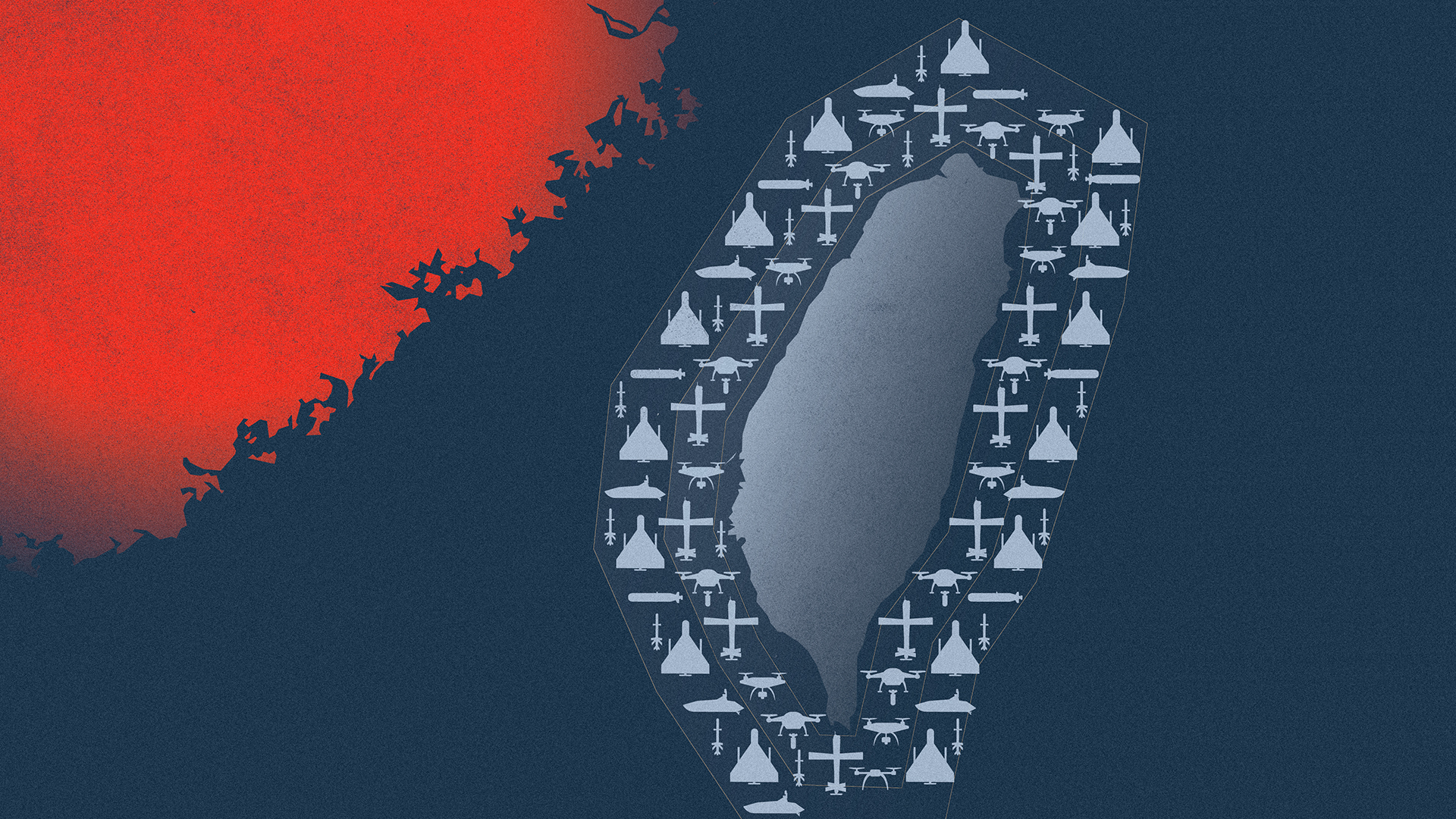
Taiwan should embrace a new asymmetric strategic concept: an uncrewed “hellscape.” By using uncrewed aerial, surface, and underwater vehicles in concert with land-based artillery, mines, and mobile air defenses, Taiwan could create a density of cross-domain fires not previously possible, deny the PRC air and sea superiority, and destroy large numbers of PLA forces.
Hellscape for Taiwan: Rethinking Asymmetric Defense by Stacie Pettyjohn and Molly Campbell is grounded in Taiwanese self-sufficiency and outlines a strategy for victory that does not rely on U.S. military forces coming to the island’s defense. Instead, the report encourages the development of large quantities of indigenous capabilities.
The report addresses several core questions: What could a Hellscape concept for Taiwan look like, and how would it fit within Taiwan’s current asymmetric strategy? What capabilities would be needed to create a “hellscape?” How could these capabilities be employed together? Perhaps most importantly, could they stop a PRC invasion force?
The report is divided into four sections. The first section provides an overview of PRC plans and preparations for an invasion of Taiwan. The second section reviews the literature on Taiwan’s asymmetric defensive strategy, which currently guides its force development, weapons procurement, and operational planning. The third section outlines the four layers of the maritime and aerial hellscape. The fourth section offers conclusions, identifies potential barriers to implementation, and presents recommendations.
The Four Layers of Hellscape
The Hellscape concept aims to optimize damage to the PLA invasion fleet across four distinct operational and geographic tiers: the over-the-horizon outer layer, the disruptive middle layer, the final run to the shore, and the landing beach. In each tier, Taiwan can deploy uncrewed technologies to exploit the inherent challenges of an amphibious invasion, with the density and intensity of attacks increasing as the Chinese fleet approaches Taiwan’s coastline.
By maximizing losses at each level, the strategy aims to deprive the PLA the sea and air superiority necessary for ultimate victory.
In the outer layer, which begins approximately 80 km from Taiwan and extends 40 km toward the shore, Taiwanese attacks aim to disrupt Chinese plans, thin the flotilla of ships, and sap air defenses, thereby making the ships that continue onward even softer targets. Fleets of underwater drones followed by aerial and surface drones would continue to strike the Chinese fleet as it crosses the Strait, while mobile Taiwanese surface-to-air missiles (SAMs) would target PLA aircraft, aiming to deny air superiority.
In the middle layer, from 40 km to 5 km offshore, Taiwan could use drones to mine the waters and slow and disorganize the Chinese landing fleets as they leave the safety of the larger ships. By deploying loitering SAMS, Taiwan could create aerial minefields, pushing PLA aircraft further back from the island.
The third layer is the final 5 km run to the shores of Taiwan (see figure below). In this layer, Taiwanese forces should focus on the destruction of incoming PLA landing craft. The geography of Taiwan’s beaches would limit the PLA landings to small waves of only around 20 ships at a time, giving defenders ample time to strike at the attackers with short-range missiles, rockets, and drones. Combining waves of short-range drones with missiles and rockets could overwhelm the PLA landing craft.
The final stage of the Hellscape strategy focuses on the beach itself. Ahead of an invasion, Taiwanese forces should embrace passive defenses by placing obstacles and mining the beaches themselves. As amphibious ships unload, they become easy targets for short-range weapons, while the mines and other obstacles will delay PLA forces, allowing defenders to inflict heavy losses with direct fire weapons and small drones.
By incorporating drones into a layered, asymmetric defense-in-depth Hellscape strategy, Taiwan could succeed in defeating and repelling a Chinese amphibious assault at the water’s edge.
The Recommendations
To successfully perform the Hellscape strategy, the authors recommend that the Taiwanese armed forces significantly boost acquisition of relevant and effective uncrewed systems, including:
- Long-range one-way attack (kamikaze) drones
- Uncrewed surface vessels
- Uncrewed underwater vehicles
- Multirotor drones
- First-person view drones
Additionally, the authors recommend that Taiwan increase and diversify investments in mobile air defense and counter-uncrewed aerial systems capabilities such as:
- Mobile SAMs
- Loitering SAMs
- Drone interceptors
- Gun-based drone defenses
- Decoys
- Passive defenses
These measures will only prove successful if accompanied by a significant expansion of Taiwanese industrial capacity.
While Ukraine produces an estimated 200,000 drones a month, Taiwan is currently capable of producing an estimated 8,000 to 10,000 drones a year. Only by significantly expanding its drone industry and securing reliable supply chains can Taiwan acquire the drones necessary to execute the Hellscape concept.
To reverse this worrying trend, the authors recommend a series of measures for Taiwan to enhance its drone-based deterrence, including:
- Amending the special defense budget to allocate more funding for domestic drone production.
- Reallocating funding away from large, exquisite platforms such as fighter jets toward increased investment in uncrewed systems
Lastly, deterrence relies on detailed operational concepts and trained forces able to execute them. Taiwan has largely trained its forces on traditional drone employment concepts, a limited understanding that neglects the asymmetric advantages new concepts could lend against a larger adversary. Additionally, Taiwan lacks an overarching theory of victory that links its uncrewed systems with other asymmetric capabilities to defeat a Chinese attack.
The authors recommend that President Lai Ching-te and Taiwan:
- Commission the Ministry of National Defense and the General Staff to review the existing operational concepts for drone warfare and release an unclassified version of the report for public viewing.
- Establish regular “Drone Labs”—structured innovation sessions that bring together career soldiers, conscripted personnel, and technical experts to rapidly prototype, test, and refine drone tactics. This bottom-up approach recognizes that frontline operators often develop the most practical and effective tactical innovations when given the tools, time, and autonomy to experiment.

Hellscape for Taiwan
Executive Summary The question of how Taiwan can effectively deter and, if necessary, defeat a Chinese invasion has become increasingly urgent. For the past two decades, Taiwa...
Read More