
October 23, 2026
Midterm Push or Meaningful Shift? Trump’s Approach to Russia
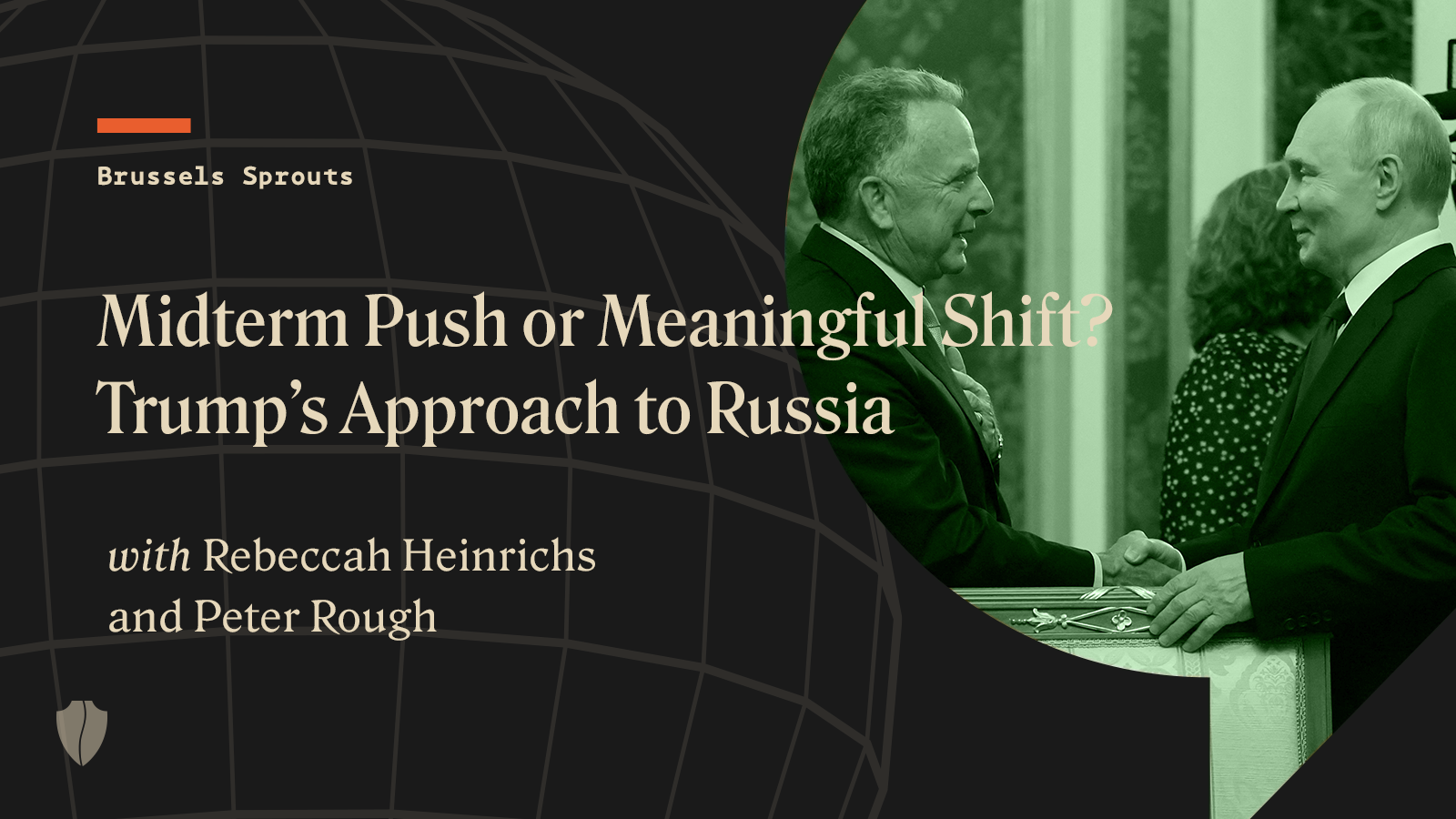
On October 9, U.S. President Donald Trump announced he had reached a deal with Russian President Vladimir Putin to produce to purchase Russian diesel ahead of next month’s midterm elections—the first in a series of overtures to Moscow. Trump also waived congressional sanctions on Russia and signaled willingness to meet with Putin and Chinese Communist Party General Secretary Xi Jinping to discuss a peace deal on Ukraine without European involvement.
The president’s deal with Putin coincides with striking animosity towards Kyiv. Trump has intensified his criticism of Ukrainian President Volodymyr Zelenskyy, claiming last week that Ukraine “needs a new president.” In response, Zelenskyy argued that Trump is attempting to force Ukraine’s surrender, citing lapses in U.S. information sharing and a temporary restriction on Starshield access. U.S. Special Envoy Steve Witkoff met with Zelenskyy in Oslo before flying to St. Petersburg on Wednesday, where he called Putin a humanitarian after his release of an American prisoner.
Yet, despite this flurry of diplomacy, there has been little progress toward peace. After Witkoff’s meeting, Russia launched an overnight bombardment of Ukraine. This escalation raises concerns, particularly from European and NATO allies, about how the United States will respond and conduct itself moving forward. To discuss the Trump administration’s approach to Russia and Ukraine, we are delighted to welcome Rebeccah Heinrichs and Peter Rough to Brussels Sprouts.
Rebeccah Heinrichs is a senior fellow at the Hudson Institute and the director of its Keystone Defense Initiative.
Peter Rough is a senior fellow at the Hudson Institute and the director of its Center of Europe and Eurasia.
More from CNAS
-
Thanks to Trump and Putin the Risk Russia Poses Is Only Likely to Grow
 Podcast
"Keep your friends close and your enemies closer." Or is it keep your enemies close and kick your friends to the curb? The Trump administration certainly seems to think the la...
By Andrea Kendall-Taylor
-
Commentary
Indo-Pacific Security / Transatlantic Security / Middle East Security
The Axis of Upheaval Goes to WarThey are fine-tuning their cooperation to make their partners more resilient—and more dangerous to the United States—while limiting costs and risks....
By Andrea Kendall-Taylor & Richard Fontaine
-
Could the Iran War Spread to Europe?
Podcast
More than seven months have passed since the United States launched Operation Epic Fury against Iran. The resulting war has disrupted global energy markets, exacerbated region...
By Andrea Kendall-Taylor & Jim Townsend
-
Ukraine's Winter Forecast: Economy and Politics
Podcast
A fast-approaching winter looms over Ukraine. Russia has intensified a concerted campaign against the infrastructure that keeps Ukraine’s economy running, striking railways, w...
By Andrea Kendall-Taylor & Jim Townsend


