
March 27, 2026
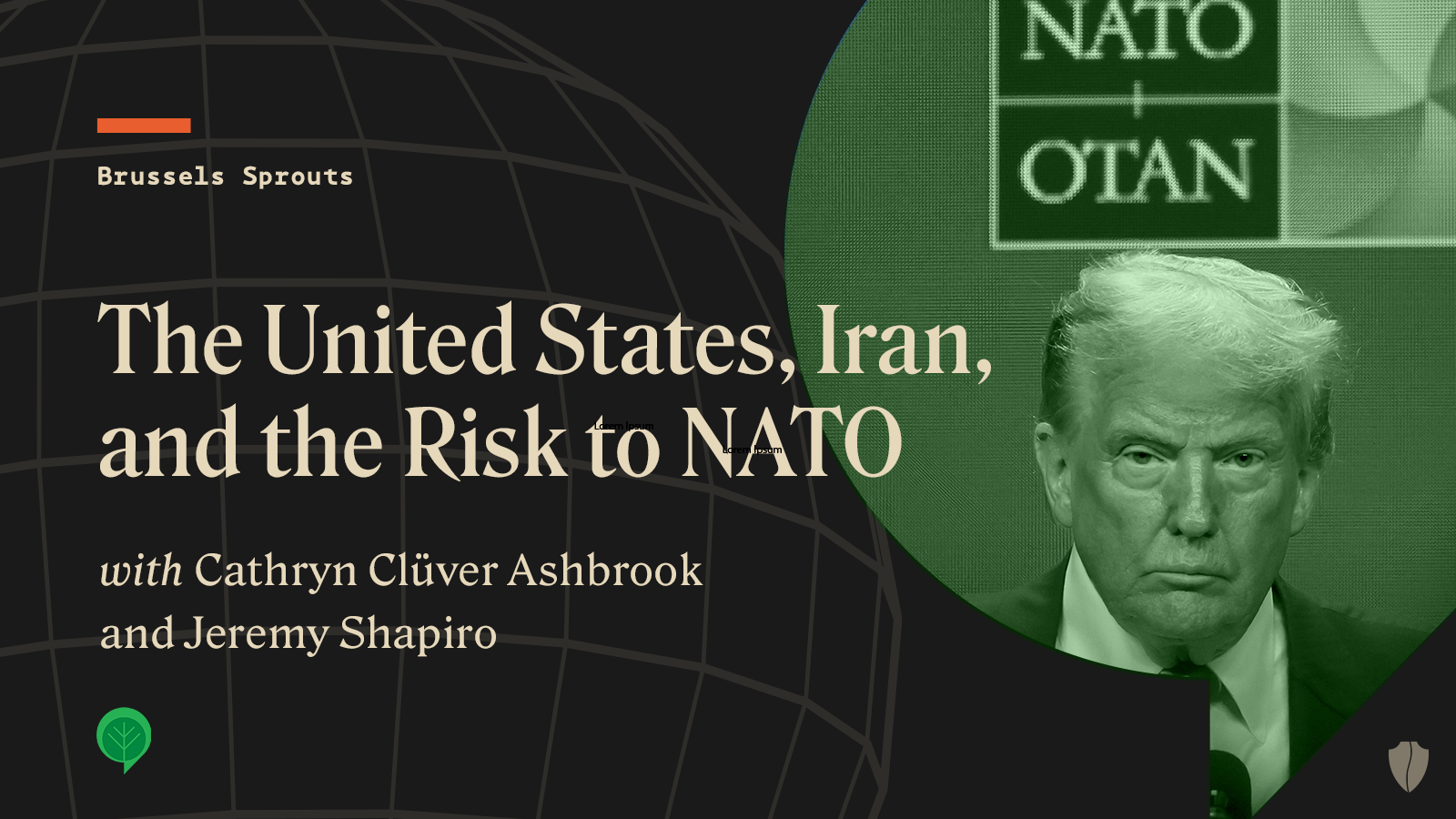
The United States, Iran, and the Risk to NATO
On March 14, in the wake of a global energy shock triggered by the United States military campaign against Iran, President Donald Trump called on allies to help reopen the Strait of Hormuz, where Iranian attacks on commercial shipping have disrupted oil flows. European leaders responded cautiously, and in many cases negatively, as they tried to balance concerns about the conflict with the need to preserve relations with Washington. German Defense Minister Boris Pistorius was blunt, saying, “This is not our war.” United Kingdom (UK) Prime Minister Keir Starmer struck a more measured tone, pledging to work with allies to restore freedom of navigation, but emphasizing that the UK would “not be drawn into the wider war.” The following day, Trump raised the stakes, warning that NATO faces a “very bad” future if allies fail to act. NATO Secretary General Mark Rutte expressed confidence that members would ultimately come together to secure the strait. But the incident has already exposed deep unease in Europe, both about the trajectory of the conflict and on the future of the transatlantic alliance.
To discuss all of this and more, Brussels Sprouts is excited to welcome Cathryn Clüver Ashbrook and Jeremy Shapiro to this week’s show.
Cathryn Clüver Ashbrook is executive vice president at the Bertelsmann Foundation
Jeremy Shapiro is the research director of the European Council on Foreign Relations, where he focuses on U.S. foreign policy and transatlantic relations
More from CNAS
-
Hibernating Bear
 Reports
Executive Summary Since Russia’s full-scale invasion of Ukraine, there have been several crises—in Syria, Nagorno-Karabakh, Venezuela, and Iran—where Russia did not intervene ...
By Andrea Kendall-Taylor, Peter Schroeder & Kate Johnston
-
Europe’s New Nuclear Deterrence Debate and France’s Answer
Podcast
On March 2, 2026, in a speech at France’s Île Longue base, French President Emmanuel Macron unveiled major changes to France’s nuclear deterrence doctrine. First, Macron annou...
By Andrea Kendall-Taylor & Jim Townsend
-
Can China Capitalize on Changing Transatlantic Currents?
Podcast
This week’s episode of Brussels Sprouts picks up in the aftermath of the Munich Security Conference. The U.S. tone at Munich was notably more conciliatory than last year, as U...
By Andrea Kendall-Taylor & Jim Townsend
-
Can Europe (Ever) Defend Itself?
Podcast
Today’s Brussels Sprouts discussion follows on from our conversation last week on whether middle powers have the ability to chart a course more independent of the United State...
By Andrea Kendall-Taylor, Jim Townsend & Franz-Stefan Gady


