
December 03, 2025
Hearing on the Operation of the Agreement between the United States of America, the United Mexican States, and Canada
Thank you for the opportunity to provide testimony today. My remarks will focus on the role that the U.S.-Mexico-Canada Agreement (USMCA) plays in advancing America’s strategic interests, with a focus on U.S. economic security interests in particular.
My comments draw from research I have conducted at the Center for a New American Security (CNAS), an independent, bipartisan think tank working on national security issues, as well my prior government service.
Many witnesses over the course of the next three days will focus on the commercial issues related to the operation of USMCA. I want to frame the conversation through a different lens, which is how USMCA is situated in the broader geopolitical context, including the important role that USMCA can play in the strategic competition with China.
Over the past decade, U.S. international economic policy has changed in profound ways, moving away from a prioritization of integration and efficiency and towards a more complex mix of policy objectives, including economic security concerns.
While conceptions of economic security differ, I will define it as the protection against risks to U.S. national security interests that can arise out of otherwise ordinary commercial interactions in the global economy.
The prioritization of economic security has been evident in the scope of new measures that the United States, and in many cases its international partners, have introduced to address discrete economic security risks, particularly those that arise from economic entanglement with China, which is at once a major economic power and an increasingly aggressive challenger to the global security order.
These measures include screening of foreign investments, expanding export controls to prevent the transfer of technologies that could determine the balance of power in any future military conflict, and restrictions on the import of connected products that could disrupt U.S. critical infrastructure.
These economic security measures can be highly complex, difficult to enforce, and potentially costly to impacted firms. It is therefore essential that the United States align its approach with its closest international partners, focus efforts on the highest areas of national security risk, and base economic security policy first and foremost on the strength and dynamism of the American economy.
The USMCA review provides a unique opportunity to advance U.S. economic security interests on all these fronts, with two over-arching goals for consideration.
First, the preservation of a stable, rules-based trade and investment framework in North America is itself a fundamental economic security interest for the United States.
The North American market is highly integrated and complementary, and the regional market is the most important source of imports and exports for all three countries. This North American advantage provides an important source of economic strength and leverage for the United States in the strategic competition with China.
USMCA provides a high-standards framework to guide these North American trade and investment ties. The rules-based, transparent nature of the agreement has been critical to providing economic actors the certainty and predictability necessary to make long-term investments in North America, including in the United States. Policy uncertainty, on the other hand, can fatally erode investor confidence, a finding that has been reinforced through scenario exercises we have conducted at CNAS.
Maintaining the integrity of USMCA as a rules-based, predictable framework for the North American market should therefore be the primary goal of the USMCA review.
The second overarching goal for the USMCA review should be to promote economic security objectives as a necessary complement to economic integration within North America.
One cannot make a strategic argument about the value of economic integration without also have a pragmatic and specific plan for ensuring that integration reduces, rather than exacerbates, economic and national security risks. The USMCA review presents an important opportunity to align economic security policies among the North American partners, strengthening their collective ability to pursue a responsible derisking from China while reinforcing their trade and investment ties within North America.
The need for stronger economic security alignment within North America is not hypothetical. One can look, for example, to the role that Mexico plays in assembling data center servers for U.S. AI infrastructure. Without robust export controls or trusted technology import programs in Mexico, sensitive U.S. technologies are at higher risk of diversion and critical U.S. AI infrastructure is more susceptible to exploitation and disruption.
To strengthen economic security alignment within North America, an updated USMCA should include commitments for each country to:
- Maintain a high-standard set of domestic economic security authorities, including for export controls, foreign investment screening, trusted technology import programs, and trade protection for strategic sectors;
- Provide each other with fast-track review processes, licensing exemptions, or other mechanisms to streamline economic security regulatory processes within North America; and
- Coordinate common tariffs towards China, while exempting each other from such tariffs.
Additional details, including suggestions for model text, are in the comments that I, along with my colleague Geoff Gertz, provided to USTR as part of this consultation process.
Importantly, we emphasize institutional alignment of authorities that each government will implement in its own domestic framework, not in any supranational structure, recognizing that each government will want to maintain the autonomy to take the economic security measures that it deems to be in its national security interest.
The administration has taken important steps to integrate economic security in its recent reciprocal trade agreements. By addressing economic security in the USMCA review, the United States can ensure that USMCA remains the highest standard trade agreement, one that promotes both economic integration and economic security and advances U.S. strategic interests.

Economic Security in North America
Executive Summary The United States, Mexico, and Canada Agreement (USMCA) negotiated during President Donald Trump’s first term includes a novel review clause. By July 2026, t...
Read MoreDownload the Full Testimony
- As a research and policy institution committed to the highest standards of organizational, intellectual, and personal integrity, CNAS maintains strict intellectual independence and sole editorial direction and control over its ideas, projects, publications, events, and other research activities. CNAS does not take institutional positions on policy issues and the content of CNAS publications (including public comments) reflects the views of their authors alone. In keeping with its mission and values, CNAS does not engage in lobbying activity and complies fully with all applicable federal, state, and local laws. CNAS will not engage in any representational activities or advocacy on behalf of any entities or interests and, to the extent that the Center accepts funding from non-U.S. sources, its activities will be limited to bona fide scholastic, academic, and research-related activities, consistent with applicable federal law. The Center publicly acknowledges on its website annually all donors who contribute. ↩
More from CNAS
-
Is This How a Europe-China Trade War Starts? With Tobias Gehrke
 Podcast
Tobias Gehrke joins Emily and Geoff to debrief on the latest news on EU-China trade tensions. They discuss the EU-China deal on hybrid vehicles, the potential for further esca...
By Emily Kilcrease & Geoffrey Gertz
-
Ziemba: No Immediate U.S. Role in Saudi-Houthi Fighting
Video
Aramco's headquarters in the eastern part of Saudi Arabia was hit by a Houthi missile attack. Authorities said the strike on Dhahran caused a limited fire and no injuries as f...
By Rachel Ziemba
-
Middle East Economic Activity Still Below Last Year, but Improving, Says Analyst Ziemba
Video
Rachel Ziemba, Founder of Ziemba Insights and adjunct senior fellow at the Center for a New American Security, joins CNBC's Access Middle East to discuss the economic resilien...
By Rachel Ziemba
-
G7 Fuel Release Offers Short Term Price Relief
Video
Bloomberg Economics economic statecraft lead and adjunct senior fellow at the Center for a New American Security Chris Kennedy tells Bloomberg This Weekend that the G7’s coord...
By Chris Kennedy


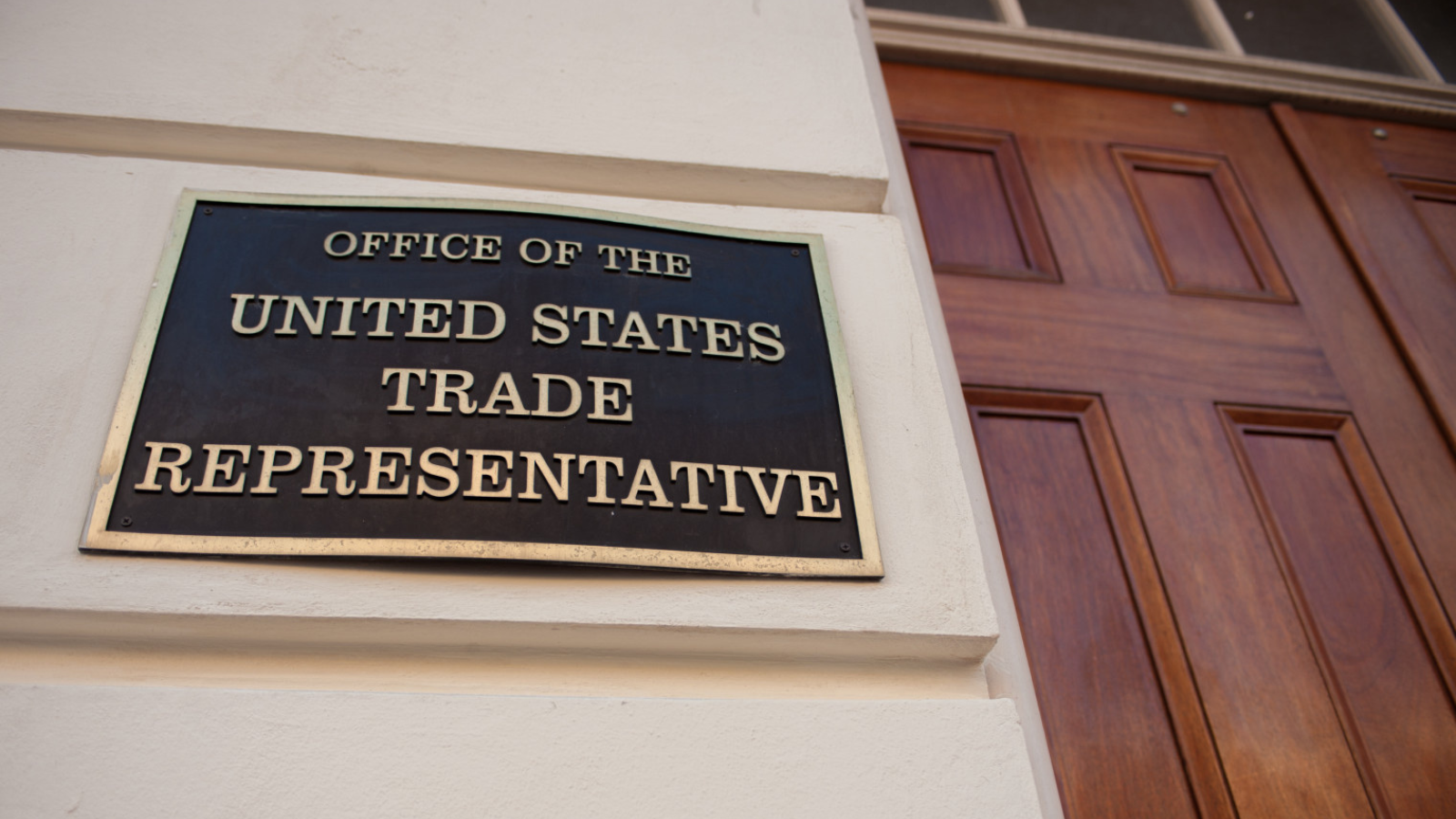
On December 3, 2025 Emily Kilcrease1, senior fellow and director of the Energy, Economics and Security Program at CNAS was invited to testify in front of the Office of the U.S. Trade Representative, regarding the operation of the Agreement between the United States of America, the United Mexican States, and Canada (USMCA) in preparation for the first Six-Year Joint Review of the USMCA on July 1, 2026. The following is her oral testimony.