
September 04, 2026
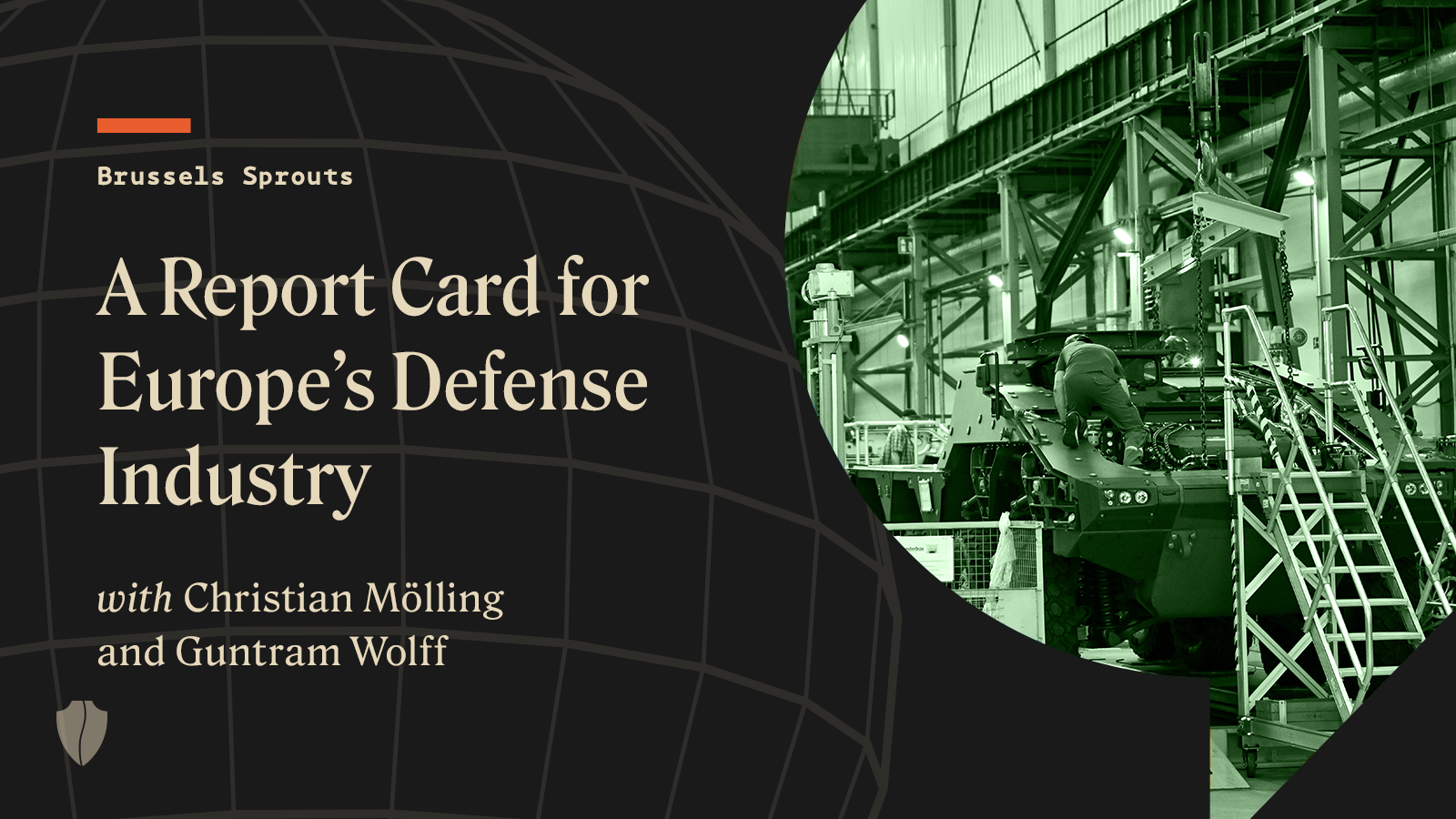
A Report Card for Europe’s Defense Industry
As the war in Ukraine rages on, Ukraine has struggled this summer with a munitions shortage. With U.S. supplies strained by the war with Iran, European governments are having a hard time filling the gap, both because of concerns about ensuring their own national defense and because of NATO commitments. With northern European governments reaching the limits of what they feel they can safely donate, there is growing pressure elsewhere, including in Poland, Spain, and Greece, who still have stocks of Patriot interceptors. Meanwhile, Ukrainian defense start-up Fire Point is sprinting to develop the Freyja interceptor, but it is not yet ready for use.
All of this exposes the need for the European defense industry to adapt. While new output will come too late for Ukraine’s immediate needs, Europe has been racing to step up its production. The European Union has launched initiatives to support drone production and integrate cyber resilience. Poland, whose defense spending has increased fourfold since 2022, is pivoting to domestic and other central European defense companies and prioritizing drones, ammunition, and other frequently used equipment. German defense giant Rheinmetall is expanding into new sectors, including shipbuilding and space.
However, questions remain about whether this is enough, especially as the United States is conducting its posture review for forces in Europe and advocating for a “NATO 3.0” in which Europeans play a larger role. What more should Europe be doing? Which firms and/or countries are leading in expansion and innovation? Where should these industries be focusing, and where are they succeeding and failing?
To answer these questions and more, we are excited to welcome Christian Mölling and Guntram Wolff to this week’s edition of Brussels Sprouts.
Christian Mölling is the director of the think tank European Defence in a New Age (EDINA) and a senior adviser at the European Policy Centre.
Guntram Wolff is a senior fellow at Bruegel, professor of economics at the Université Libre de Bruxelles, and a fellow at the Kiel Institute for the World Economy.
More from CNAS
-
Midterm Push or Meaningful Shift? Trump’s Approach to Russia
 Podcast
On October 9, U.S. President Donald Trump announced he had reached a deal with Russian President Vladimir Putin to produce to purchase Russian diesel ahead of next month’s mid...
By Andrea Kendall-Taylor
-
Thanks to Trump and Putin the Risk Russia Poses Is Only Likely to Grow
Podcast
"Keep your friends close and your enemies closer." Or is it keep your enemies close and kick your friends to the curb? The Trump administration certainly seems to think the la...
By Andrea Kendall-Taylor
-
Commentary
Indo-Pacific Security / Transatlantic Security / Middle East Security
The Axis of Upheaval Goes to WarThey are fine-tuning their cooperation to make their partners more resilient—and more dangerous to the United States—while limiting costs and risks....
By Andrea Kendall-Taylor & Richard Fontaine
-
Could the Iran War Spread to Europe?
Podcast
More than seven months have passed since the United States launched Operation Epic Fury against Iran. The resulting war has disrupted global energy markets, exacerbated region...
By Andrea Kendall-Taylor & Jim Townsend


