

December 22, 2025
CNAS 2025 Wrapped: Reports
Throughout 2025, CNAS experts cut through the noise of a volatile policy environment to provide bold, innovative, and actionable analysis of the most pressing national security issues of today and tomorrow. Over the course of the year, CNAS published 32 reports covering subjects ranging from the revitalization of the U.S. defense industrial base (DIB) to the role of global swing states in great power competition with China to the future of the Quad partnership between the United States, Australia, India, and Japan.
At a time when the U.S. role in the international community hangs in the balance, CNAS experts continue to develop pragmatic and principled national security policy. Read some of the most popular reports from 2025 to prepare for another year of in-depth research and analysis on the key issues the United States faces.
Top Reports of 2025
The First 100 Days — Richard Fontaine, Geoffrey Gertz, Emily Kilcrease, Janet Egan, Paul Scharre, Vivek Chilukuri, Sam Howell, Constanza M. Vidal Bustamente, Stacie Pettyjohn, Carlton Haelig, Becca Wasser, Josh Wallin, Jacob Stokes, Lisa Curtis, Katherine Kuzminski, Carrie Cordero, Jonathan Lord, and Jim Townsend
A new presidential administration means new priorities and perspectives. Published on Inauguration Day, The First 100 Days features 15 essays from CNAS experts that lay out practical, bipartisan recommendations for the second Trump administration’s first 100 days in office. The series covers everything from economic security to U.S. AI innovation to the military recruiting crisis.

The First 100 Days
The First 100 Days is a series of recommendations from CNAS experts. The recommendations span the most pressing issues that will test the administration, including competition...
Read MoreSanctions by the Numbers: 2024 Year in Review — Eleanor Hume and Kyle Rutter
The United States continues to expand its use of sanctions and entity-based export controls—largely in response to Russia’s war in Ukraine, competition with China, and conflict in the Middle East. Eleanor Hume and Kyle Rutter break down Washington’s coercive economic toolkit in 2024 and look ahead to what 2025 might bring.
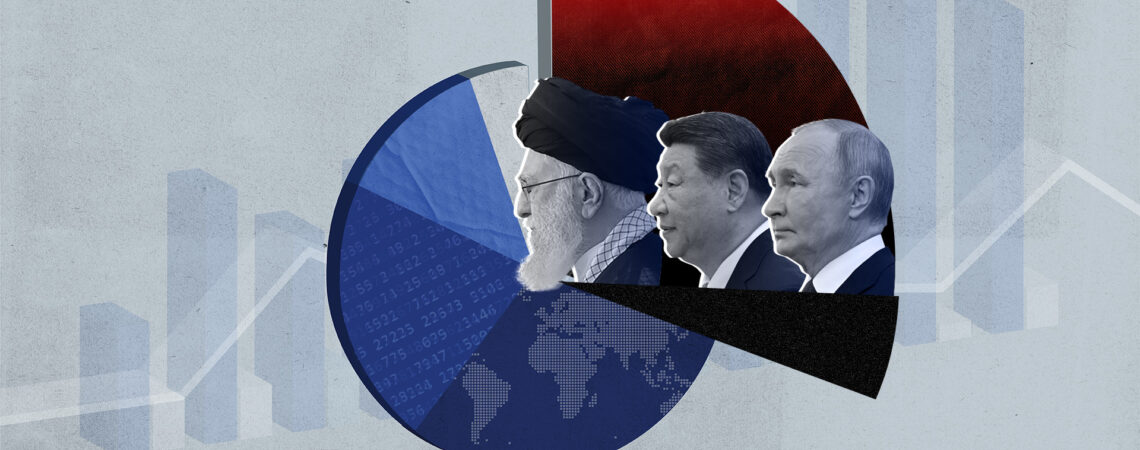
Sanctions by the Numbers: 2024 Year in Review
Washington’s economic statecraft has expanded in recent years, largely in response to Russia’s war in Ukraine, competition with the People’s Republic of China...
Read MoreCountering the Swarm — Stacie Pettyjohn and Molly Campbell
The proliferation of cheap drones has shattered America's decades-long air dominance, and the Pentagon's current counter-drone investments fall short. Authors Stacie Pettyjohn and Molly Campbell provide actionable recommendations for building the layered defense systems and AI-enabled capabilities the Joint Force needs to survive—and win—in the drone age, especially against a rapidly advancing Chinese threat.

Countering the Swarm
After decades of air dominance and a near monopoly on precision strike, the United States now faces a dramatically different, more hostile world as the proliferation of cheap ...
Read MoreFrom Production Line to Front Lines — Becca Wasser and Philip Sheers
Without a strong, resilient, and productive defense industrial base, the United States will be unable to deter aggression from China and Russia—let alone win a great power conflict in the future. Becca Wasser and Philip Sheers analyze the current state of the U.S. DIB before providing recommendations to make the U.S. DIB more capable, responsive, flexible, and resilient.

From Production Lines to Front Lines
Executive Summary The U.S. defense industrial base (DIB) is struggling to meet the demands of the current strategic environment—let alone prepare for a potential conflict agai...
Read MoreQuad: The Next Phase — Lisa Curtis, Kareen Hart, Ryan Claffey, Keerthi Martyn, and Thomas Corel
As the competition between the United States and China intensifies, the Quad—the partnership between the United States, Australia, India, and Japan—has become a key player in Indo-Pacific economic and tech cooperation. The authors recommend that the Quad partners deepen and expand their work to achieve their shared goal of a free and open Indo-Pacific.

Quad: The Next Phase
The Quadrilateral Security Dialogue (Quad) among the United States, Australia, India, and Japan is becoming the focal point for economic and technological cooperation in the I...
Read MoreGlobal Swing States and the New Great Power Competition — Richard Fontaine and Gibbs McKinley
With increasing challenges to the U.S.-dominated international order from countries like China, Russia, Iran, and North Korea, six “global swing states”— Brazil, India, Indonesia, Saudi Arabia, South Africa, and Türkiye—could be pivotal to the future global order. Richard Fontaine and Gibbs McKinley give an overview of each swing state’s position in the global order before offering specific recommendations for future U.S. engagement.

Global Swing States and the New Great Power Competition
International politics is undergoing a period of rapid, significant change. China and Russia are working together more closely and alongside Iran and North Korea...
Read MoreUnderstanding Russia’s Calculus on Opportunistic Aggression in Europe — Andrea Kendall-Taylor, Jim Townsend, Kate Johnston, and Greg Weaver
In the future, Russia might see U.S. involvement in a conflict in the Indo-Pacific as an opportunity to undermine NATO. The authors take stock of the capabilities needed to defend U.S. allies and partners in the Indo-Pacific and Europe and provide a look into Russia’s possible opportunity calculus.

Understanding Russia’s Calculus on Opportunistic Aggression in Europe
Executive Summary Numerous factors are working to dissuade Russia from directly challenging NATO, but once Moscow reconstitutes its military, one scenario stands out as a plau...
Read MoreCountering the Digital Silk Road — Vivek Chilukuri and Ruby Scanlon
Over the last 10 years, China has used the Digital Silk Road (DSR) to strengthen its technology leadership and geopolitical ties. As digital infrastructure and emerging technologies become increasingly important to national security, the United States and its allies and partners must offer an alternative to the DSR. Vivek Chilukuri and Ruby Scanlon provide an in-depth analysis of the implications the DSR has on the United States and lay out a comprehensive set of recommendations aimed at strengthening U.S. and allied efforts to counter the DSR.

Countering the Digital Silk Road
The year 2025 marks the 10th anniversary of the Digital Silk Road (DSR), China’s effort to strengthen its global ties and influence through technology. In the decade since the...
Read More